
ADHD Rejection Sensitivity: Why Small Comments Hurt?
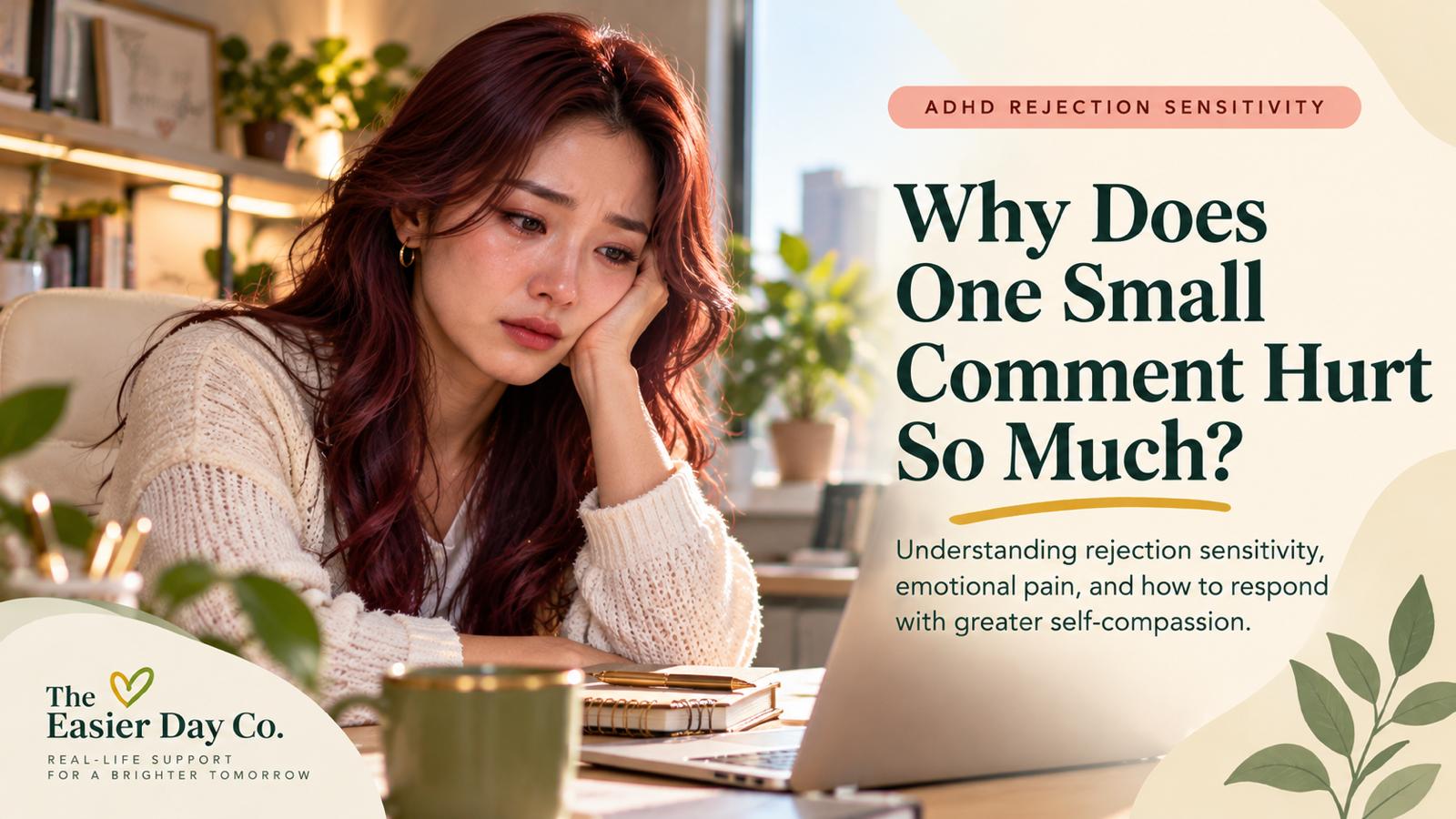
Why Does One Small Comment Hurt So Much?
Understanding ADHD Rejection Sensitivity
Have you ever received a short text message and immediately wondered if someone was upset with you?
Maybe your friend replied with a simple "Okay" instead of their usual cheerful message.
Maybe your boss suggested a small change to something you worked hard on.
Or perhaps someone made an innocent comment, but you spent the rest of the day replaying it in your mind.
Suddenly, your thoughts start racing.
"Did I do something wrong?"
"Are they disappointed in me?"
"What if they don't like me anymore?"
And even though part of you knows the situation might not be serious, the emotional pain feels very real.
If this sounds familiar, you may recognize experiences often described as rejection sensitivity.
For some people with ADHD, perceived criticism or rejection can trigger particularly intense emotional reactions.
But here's something worth remembering:
Feeling hurt easily doesn't mean you're weak. It means your emotional experience deserves understanding, care, and support.
What Is Rejection Sensitivity?
Rejection sensitivity describes a tendency to anticipate, notice, or react strongly to signs of rejection, disapproval, or criticism.
Sometimes the rejection is real.
Other times, the situation is unclear, but your mind interprets it as rejection.
For example:
A friend doesn't answer your message, and you worry they're avoiding you.
Your manager offers constructive feedback, and you feel like you've failed.
Someone cancels plans, and you immediately wonder whether they enjoy spending time with you.
Your partner seems distracted, and you assume they're upset.
You make a small mistake and feel deeply embarrassed.
These reactions can happen to anyone.
However, some people with ADHD report particularly strong emotional responses to perceived rejection.
You may also have heard the phrase rejection sensitive dysphoria (RSD).
RSD is a term used to describe intense emotional distress related to perceived rejection, criticism, or failure. It is not currently recognized as a separate formal diagnosis in major diagnostic manuals.
Rejection sensitivity is also not exclusive to ADHD. Anxiety, past experiences, relationship difficulties, and other factors can contribute.
Understanding the pattern is more useful than rushing to label yourself.
Why Can Rejection Feel So Personal?
Imagine spending hours preparing something important.
You worked hard, checked every detail, and finally felt proud of what you accomplished.
Then someone says:
"This is good, but could you change this part?"
For another person, that might feel like an ordinary suggestion.
For you, it might immediately feel like:
"They think I did a terrible job."
You might become embarrassed, defensive, tearful, or suddenly want to give up.
Why?
Because your brain may have interpreted feedback about one small detail as a judgment about your entire ability or worth.
When someone is already managing emotional overwhelm, low confidence, or difficult past experiences, criticism can feel especially threatening.
ADHD-related difficulties with emotional regulation and impulse control may also make it harder to pause before reacting.
But an important distinction is this:
Feeling rejected doesn't always mean you've been rejected.
Your feelings are real, even when your first interpretation of the situation may not be accurate.
How Rejection Sensitivity Can Affect Everyday Life
Rejection sensitivity doesn't always look like crying or becoming visibly upset.
Sometimes it shows up quietly.
Overthinking Conversations
You replay what someone said, searching for hidden meanings.
You wonder whether your response sounded strange or whether you accidentally offended someone.
Avoiding Opportunities
You hesitate to apply for a job, share an idea, or try something new because the possibility of rejection feels unbearable.
People-Pleasing
You say yes when you want to say no.
You work hard to keep everyone happy because disappointing someone feels frightening.
Pulling Away From Others
When you think someone is upset with you, you may withdraw before they have a chance to reject you.
Becoming Defensive
Even gentle feedback can feel painful enough that you respond with anger or frustration before fully understanding what was said.
These patterns can affect confidence, relationships, and everyday decisions.
Recognizing them is an opportunity to develop new responses—not another reason to criticize yourself.
5 Gentle Ways to Manage Rejection Sensitivity
1. Separate the Feeling From the Facts
When something hurts, your mind may immediately create a story about what happened.
For example:
Situation: Your friend hasn't replied to your message.
Feeling: Hurt, anxious, or rejected.
Interpretation: "They're ignoring me because I did something wrong."
But there may be other explanations.
They could be busy, tired, distracted, or dealing with something personal.
Try asking yourself:
"What do I know for certain, and what am I assuming?"
You don't have to dismiss your feelings.
You're simply making room for more than one possible explanation.
2. Give Yourself Time Before Responding
When rejection feels intense, you might want to react immediately.
You may feel tempted to send another message, apologize repeatedly, argue, or withdraw.
Instead, try creating a short pause.
You can say:
"I need a little time to think about that."
Or:
"Can we come back to this conversation in a few minutes?"
A pause gives your emotions time to settle before you decide what to do.
You can feel something strongly without having to act on it immediately.
3. Practice a Kinder Inner Conversation
Rejection sensitivity can come with harsh self-talk.
You might tell yourself:
"I'm so embarrassing."
"Nobody likes me."
"I always mess things up."
Try replacing these thoughts with something more balanced.
Instead of:
"Everyone thinks I'm a failure."
Try:
"I received feedback about one thing. That doesn't define my worth."
Instead of:
"They haven't answered because they don't like me."
Try:
"I don't know why they haven't responded yet."
You don't have to force yourself to believe everything is wonderful.
The goal is to make your inner conversation fairer and less punishing.
4. Ask for Clarity When You Need It
Sometimes uncertainty is what makes rejection sensitivity so difficult.
Rather than spending hours guessing what someone meant, consider asking a calm, respectful question.
For example:
"When you mentioned changing my work, was there something specific you wanted me to improve?"
Or:
"You seemed quiet earlier. Is everything okay between us?"
Asking for clarity can help prevent misunderstandings.
However, if you notice yourself repeatedly seeking reassurance about the same situation, it may help to practice tolerating some uncertainty rather than checking again and again.
5. Build a Personal Rejection Recovery Plan
Difficult moments are easier to navigate when you already have a few supportive steps prepared.
Try this simple plan:
My 3-Step Rejection Recovery Reset
Step 1: Notice the trigger.
"That comment made me feel rejected."
Step 2: Check the story.
"Am I reacting to something I know, or something I'm afraid might be true?"
Step 3: Choose one supportive action.
Take a short walk, write down your thoughts, pause before replying, or talk with someone you trust.
Your goal isn't to make the hurt disappear instantly.
It's to give yourself enough space to respond in a way that supports your well-being.
What If the Rejection Is Real?
Sometimes people really do criticize, exclude, disappoint, or reject us.
And that can hurt.
Managing rejection sensitivity doesn't mean pretending every relationship is healthy or every criticism is fair.
It means learning to recognize what happened and deciding how to respond.
You can ask yourself:
Was the feedback constructive or unnecessarily hurtful?
Is this a misunderstanding or a repeated pattern?
Do I need to communicate a boundary?
Is this relationship supportive and respectful?
What can I learn without blaming myself for everything?
You can acknowledge real rejection without allowing it to define your value.
Not everyone will understand you, agree with you, or choose the same things you do.
That doesn't mean you are unworthy of respect, friendship, or love.
When Rejection Sensitivity Starts Affecting Your Life
If fear of rejection regularly prevents you from maintaining relationships, pursuing opportunities, or expressing your needs, additional support may be helpful.
A qualified mental health professional can help you explore emotional patterns and develop coping strategies.
Approaches such as cognitive behavioral therapy may help with unhelpful interpretations, avoidance, and emotional responses.
Support should be tailored to your circumstances, particularly if anxiety, trauma, depression, or other difficulties are also involved.
You don't have to navigate persistent emotional pain without help.
A Gentle Reminder: You Are More Than Someone Else's Opinion
One unanswered message doesn't determine your worth.
One piece of criticism doesn't erase your effort.
One awkward conversation doesn't define your personality.
And one person's disappointment doesn't mean you've failed as a human being.
You can learn from feedback without turning it into a judgment about who you are.
You can care about your relationships without taking responsibility for everyone else's emotions.
You can feel hurt and still give yourself permission to move forward.
Your feelings deserve compassion. Your worth doesn't depend on universal approval.
Need a Little More Support?
If criticism, unanswered messages, or perceived rejection often leave you feeling overwhelmed, having a simple plan to return to may help.
That's why we created the ADHD Rejection Sensitivity Rescue Kit from The Easier Day Co.
It's designed to offer gentle, practical support for recognizing emotional triggers, checking anxious assumptions, and choosing manageable responses during difficult moments.
No pressure to stop caring.
No expectation to become emotionally unaffected.
Just supportive tools to help you navigate rejection-related feelings with greater understanding and self-compassion.
Explore the ADHD Rejection Sensitivity Rescue Kit on The Easier Day Co. shop.
The Easier Day Co. — Real-life support for the days that feel harder than they should.
ADHD Life Rescue Kit
Printable tools and structured trackers designed to simplify your day.
Written with compassion by Home Reset Team
The Easier Day Co. creates research-backed, practical resources to help neurodivergent brains manage daily friction without shame.